

AI Strategy
AI Workflow Reduced Analysis Times by 98%
Turning unstructured data into actionable insights - at scale, and at speed.
AI is only valuable when it delivers insight, automation, or decisions that drive actual business results.
My approach to AI in product management is grounded in understanding the human problem first, then applying the right machine intelligence to automate, accelerate, or enhance.
I focus on pragmatic integration - deploying AI where it creates leverage, iterating quickly, and always measuring against user value and commercial outcomes.
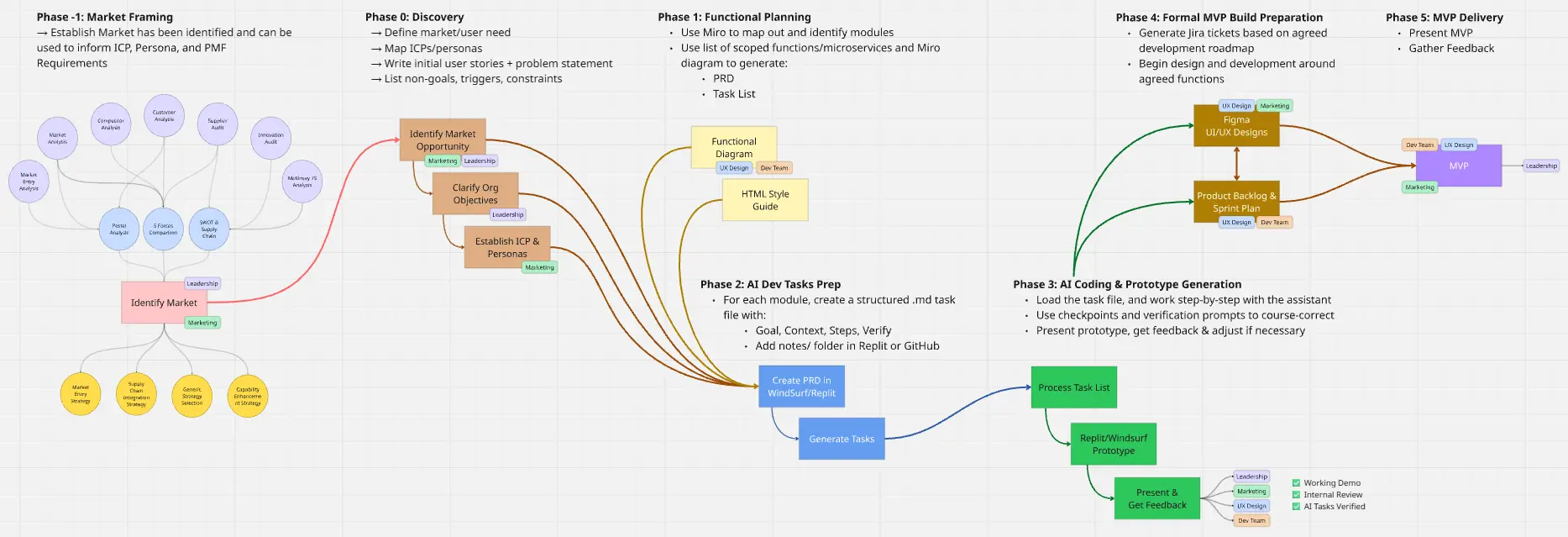
My approach to AI product development emphasizes structure, clarity, and rapid iteration. I use a multi-phase workflow, as shown below, to go from market definition to a working, verifiable MVP.
I minimize AI hallucination and maximize consistency by generating JSON files, reference values, and structured tags wherever possible. This reduces ambiguity, supports traceable outputs, and accelerates integration with existing systems.
AI is most valuable when it’s predictable, interpretable, and can be integrated into business processes. That’s why my prototypes are built around structured data - not just language fluency.
A US-based political consultancy needed to transform a time-consuming, manual process - reviewing news and social media to understand voter sentiment in specific regions - into an automated workflow.
The value proposition the service offered was insight and guidance, but the majority of effort was spent collecting and analyzing data.
As Product Manager, I led the design and delivery of an AI-driven sentiment analysis tool using the OpenAI API.
Successful AI products solve a business problem first - the technology is only as valuable as the insight or automation it unlocks.


